
Kalika
Kalika
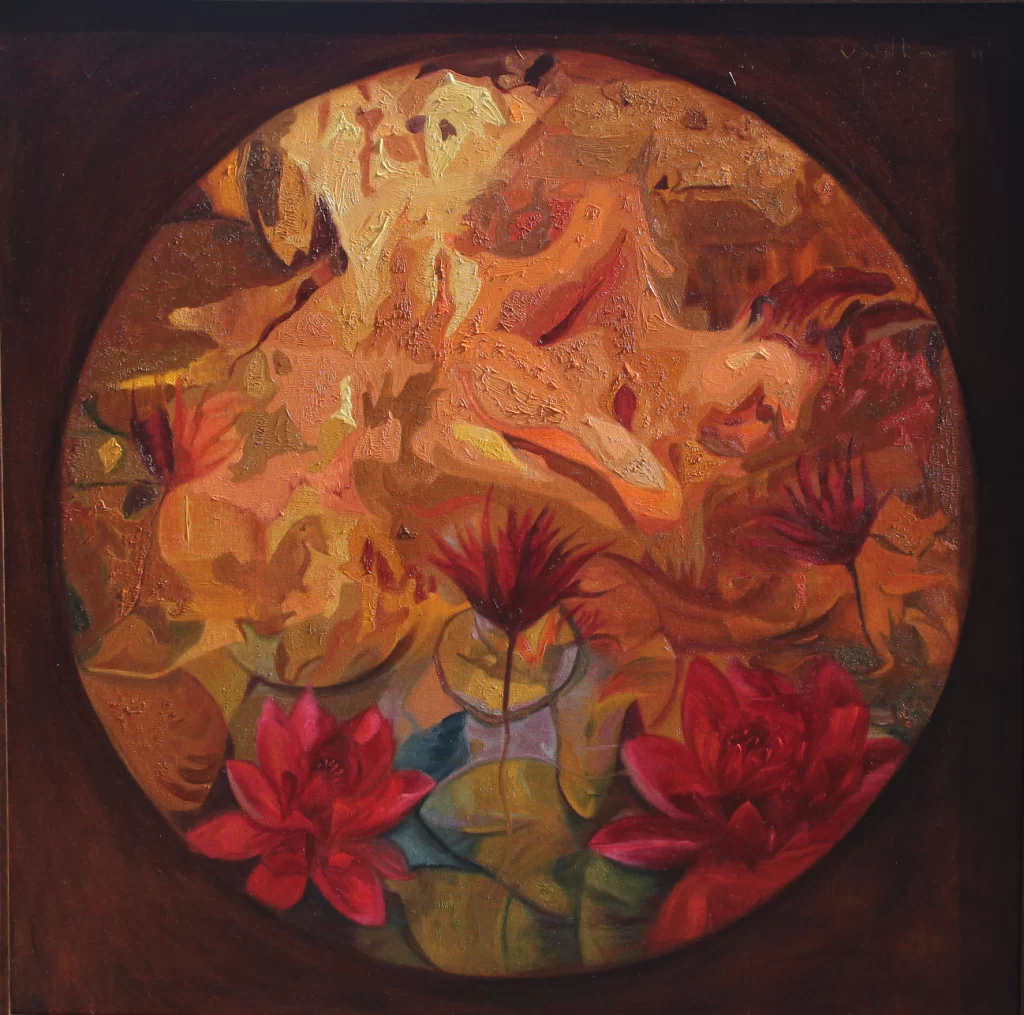
This striking oil painting, titled “Kalika,” and measuring 36 x 36 inches on canvas, offers a rich and evocative experience for the art lover.
Here is an explanation tailored to appreciate its artistic qualities:
Title and Subject Matter:
- The title, “Kalika,” immediately suggests a connection to the Hindu Goddess Kali, a powerful and fierce manifestation of the Divine Mother associated with time, change, destruction, and ultimate liberation.
- However, the visual representation here is not the typical iconic image of the blue or black-skinned goddess adorned with skulls. Instead, the artist has chosen to embody the spirit or essence of Kalika within a vibrant, natural setting, specifically a pond or water garden teeming with deep red water lilies. This abstract, symbolic interpretation allows the viewer to contemplate the goddess’s energy rather than her literal form.
Composition and Use of Space:
- The painting is framed within a distinct circular central motif, which immediately draws the eye and creates a sense of focused intensity, like a portal or a reflection on a pool’s surface. The outer, darker brown border acts as a grounding contrast, pushing the vibrant circular scene forward.
- The composition is a dynamic interplay of near and far. The large, vividly painted red lilies in the foreground feel almost physically present, while the swirling background is rendered with an energetic, almost abstract treatment of light and color, suggesting deep water, reflections, or a cosmic blaze.
Color and Light:
- The palette is dominated by warm, intense hues—deep reds, brilliant oranges, ochres, and earthy browns. This fire-like color scheme is crucial to conveying the powerful, fierce, and transformative energy associated with Kalika.
- The treatment of light is dramatic. An almost blinding burst of bright gold and yellow seems to erupt from the upper center, possibly symbolizing divine power, a sunrise, or the chaotic, creative/destructive force of time (Kaala). This light beautifully catches the thick texture of the paint.
Technique and Texture (Oil on Canvas):
- The artist masterfully uses oil paint to create a highly textured surface. The visible, thick impasto, especially in the central swirling area, adds a tactil