
Ganesha
Ganesha
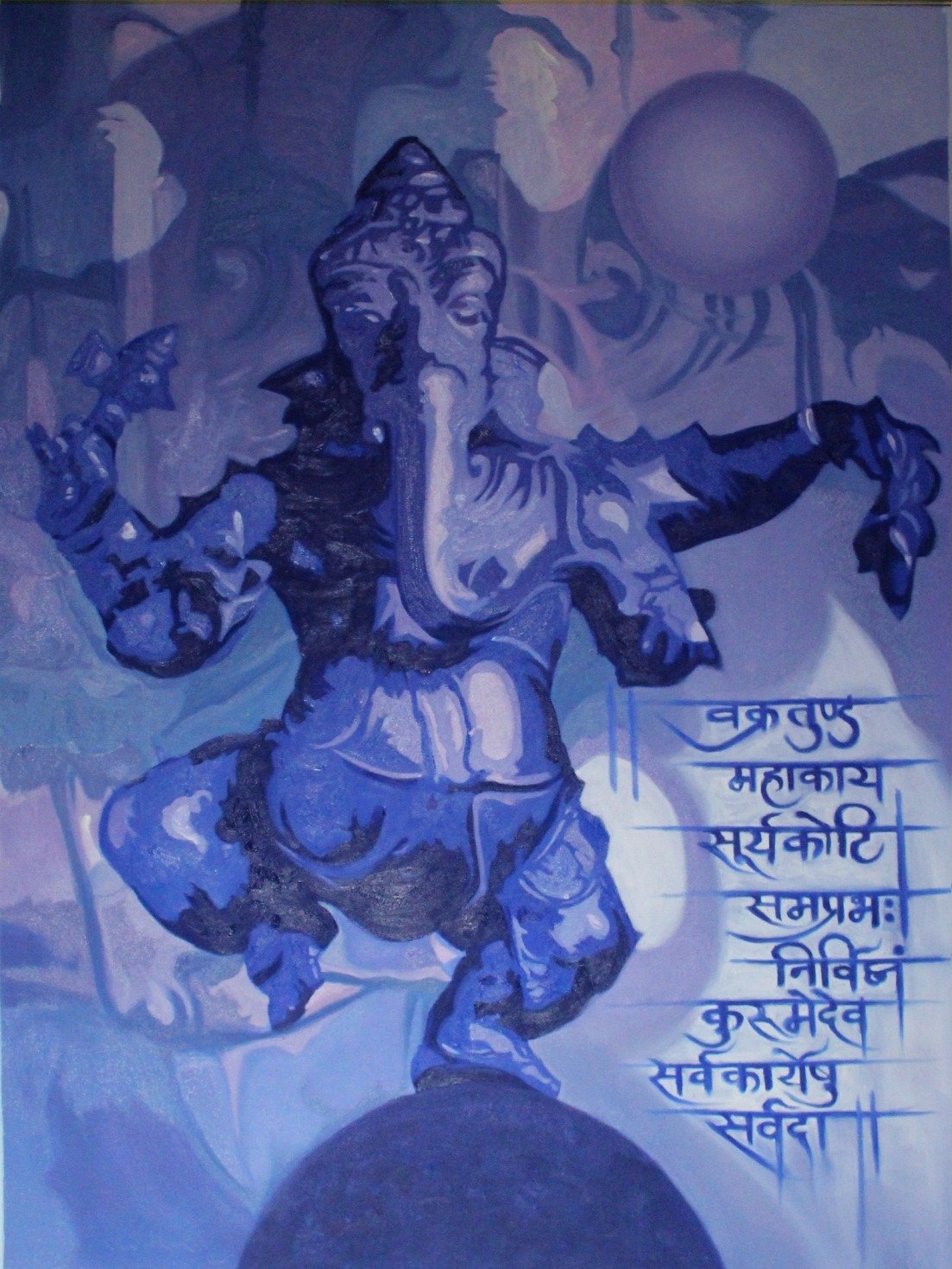
This is a fascinating and powerful piece of art for an art lover. Here is an explanation and interpretation:
Artwork Analysis for an Art Lover
- Subject and Iconography:
- Deity: The central figure is Ganesha (also known as Ganapati or Vinayaka),
one of the most widely worshipped deities in the Hindu pantheon. He is revered as the
remover of obstacles (Vighnaharta), the patron of arts and sciences, and the deva of intellect
and wisdom. - Pose and Mood: Unlike the typical seated or standing representations, this Ganesha is
depicted in a dynamic, almost dancing or warrior-like pose. He seems to be in motion,
possibly a tandava or a vigorous, forceful stance, which imbues the piece with tremendous
energy and power. The slightly hunched, forward-leaning posture and the expression on his face
suggest intense focus or the moment before decisive action. - Color Palette: The painting uses a predominantly monochromatic blue and violet palette.
Blue, in spiritual art, often signifies the infinite, the divine, and the cosmic. Shades of indigo,
cobalt, and lavender create moodiness and depth, giving the figure a sculpted, ethereal quality.
Deep shadows enhance the drama and three-dimensionality. - Composition: The figure is centered dynamically, balanced atop a hemisphere or dome-like
form, symbolizing mastery over the world or the cosmic egg (Brahmanda). The swirling,
abstract background evokes a cosmic or spiritual realm. The large, subtle sphere in the upper
right further enhances the celestial atmosphere.
- Style and Technique:
- Style: The artwork leans toward Expressionism with a modern reinterpretation
of traditional iconography. Instead of strict realism, the forms are abstracted, angular,
and highly contrasted, giving the deity a raw and visceral presence. Loose, energetic brushwork
in the background contrasts with the sharper definition of the central figure. - Visual Texture: Highlights in lighter blues layered over deep indigo shadows create a
rich sense of texture. The figure appears carved from dark stone or emerging from a deep
cosmic mist, enhancing its mystical and powerful presence.
- Overall Artistic Impact:
- The painting is a powerful blend of spirituality, dynamic energy, and dramatic colorism.
- It transcends a simple devotional representation and becomes a contemporary meditation on:
- Ganesha’s power as the ‘Remover of Obstacles.’ The expressive technique conveys the infinite, forceful nature of the deity, presenting Ganesha as an active, potent cosmic force rather than solely a benevolent god.
When I turn to the spiritual and mythological, I seek to capture energy over form.
Agni Tandava is an intensely hued expression of the ultimate cosmic dance. It is the fierce, transformative fire—the Agni—that accompanies Shiva’s dance. However, the true concept here is the harmony between the masculine and feminine: Shiva (consciousness) and Shakti (power). The swirling forms and reds illustrate their inseparable union, the forces of creation and dissolution bound together in a dynamic, passionate balance.
In the same vein, works like Ganesha and Kalika move beyond traditional iconography. My Ganesha, rendered in a monochromatic blue and violet palette, is not a static deity but a dynamic, potent cosmic force, the remover of obstacles depicted in a vigorous, almost warrior-like stance.
Kalika, too, is an embodiment of spirit rather than a literal figure. The goddess’s energy is captured in a circular portal of deep red water lilies and a burst of fiery light. The thick, textural impasto and intense colors convey her transformative power, channeling the fierce, vibrant energy of time and change into a dynamic focal point.
In every piece, from the tattered cloth of my childhood to the fiery dance of the cosmos, my aim is to use the visceral power of color and texture to make the abstract concept visual. To feel the warmth of the reflection, the cool detachment of the bloom, or the heavy weight of a generational bond—this is the true purpose of my art.